Father, this we ask be done

One night a few years ago, my son Andrew (about 5 at the time) asked me to sing “God is Bigger than the Boogie Man.” Somewhere the kids must have seen that particular VeggieTales movie. I’m not a big fan of VeggieTales in general, but I wasn’t lying when I told him, “I don’t really know that one. Can we sing something else?”

That night I sang to him a hymn, which, I explained, basically has the same sentiment. But in my mind, it is far superior to the cute vegetable jingle. This is a song that my boys won’t grow out of, but a song they can grow into. They can sing this one for the rest of their lives, and it will never be cast off as “cute” or “kidsy.” The second thing, and probably even more important, is that this hymn approaches God, who is actually bigger than the boogie man, in his grace and mercy through Jesus Christ, rather than merely through his omniscience and omnipresence. Apart from Jesus, God is no less frightening than the worst of boogie-men.

Since then, this hymn has been the most-requested bedtime hymn in the boys’ room. Just tonight, Isaiah stumbled back out of bed, asking me to come and sing before he fell asleep. I thought it was a most appropriate selection for the eve of Rogate Sunday.

Before the ending of the day,
Creator of the world, we pray.
Your grace and peace to us allow
And guard and keep your people now.

From evil dreams defend our sight,
From all the terrors of the night,
From all deluding thoughts that creep
On heedless minds disarmed by sleep.

O Father, this we ask be done
Through Jesus Christ, your only Son,
Whom with the Spirit we adore
Forever and forevermore. Amen.

Christian Worship #595  Latin hymn c. 6th century
tr. John M. Neale, 1816–66, alt.

Posted in Children, Church Year, Family, Hymnody | Leave a comment

Incredible

Indeed, it is more incredible that He who is eternal should die than that you who are mortal should live eternally. If you believe what is more incredible, how could you doubt the other?

 –Johann Gerhard, Handbook of Consolations

Posted in Books, Quotations, Seelsorge | Tagged , | Leave a comment

Lutherans Confess from Generation to Generation

Here’s a great video and post from Paul McCain’s Cyberbrethren blog:

Confessing the Faith…Through All Generations – In Honor of Lutheran Schools Week (Featuring Lyle Lovett)

Here is a beautiful YouTube video of the reading of the Nicene Creed which dates back over a 1,000 years in the the Christian church. This recitation was done at Trinity Lutheran Church, Klein, TX during the March 4, 2012 church services by three members of Trinity as part of Lutheran Schools week. These three members, and students (former and present) are: Mr. Erich Klenk, 97 years old, confirmed in 1928, past Chairman of the congregation, charter member of the Men’s Club in 1946,  and Trinity’s oldest member. Lyle Lovett, great grandson of Trinity founding father Adam Klein, confirmed in 1971, singer/songwriter, and winner of four Grammys. Erin Pali, class of 2016 and current 4th grade student of Miss Marilyn Peterson/ Erin’s Dad Brett also had Miss Petersen in 4th grade during his years at Trinity. This video was posted to YouTube by Pat Blake.

Lot long ago I had seen that Lyle Lovett‘s new album included Martin Luther’s hymn “Lord, Keep Us Steadfast In Your Word.” You can listen to a preview of the song below, or click to order or download the album.

You don't have a sufficient version of Flash Player to display this animation.

Posted in Music, School, Symbolics | Tagged , , , | Leave a comment

Certificate of Baptism

This year, as a Christmas gift to me, my dear bride put all of our family’s baptismal certificates into frames. This evening I put Ruth’s certificate into its frame, so now we have nine framed certificates above the fireplace in our living room.

Ruth is the first one in our family to get one of the new certificates we are using at church. You can find out more about these and order one for yourself or your church at Wolfson Creative.

Posted in Baptism, Family, Home | Tagged , | Leave a comment

Lutheran Education

In his recent book, Lutheran Education: From Wittenberg to the Future, Dr. Thomas Korcok examines the history of Lutheran schools, starting with Luther and the other Wittenberg reformers and ending with a discussion of how Lutheran schools today best make use of this rich heritage. The basic premise is that throughout its history, confessional Lutheranism has considered the education of their youth to be critical to the ongoing life of the church. In every age, the church’s schools have had to determine how this work is to be done. Korcok makes the case that at critical points in its history, Lutherans have determined that the classical liberal arts model of education was the ideal in accomplishing its aims. And yet, Korcok shows how Luther and the Wittenberg educators, and then Walther and the Saxon immigrants modified and adapted the liberal arts for their own use. In each generation, various theological and educational movements either needed to be rejected or adapted in order for Lutheran education to be useful. Luther dealt with medieval scholasticism and Aristotelian philosophy, while also understanding that Erasmus’ humanism wasn’t the complete answer either. In Walther’s day, Rationalism was a force opposed to the Lutheran teaching, while Pietism was the pervasive background, even to many confessional Lutherans of that era.

It was enlightening to see how these Lutherans saw in the liberal arts (and their adaptations of it) a natural way of passing on the faith to the next generation and raising up another generation of useful members of society, particularly in the seedbed of society, the home. Baptism, vocation, and catechesis were central. Music was considered  an essential part of this education, and was incorporated into the lower trivial arts. Languages were always important, as language is the means by which God communicates in his word and the tool with which the baptized serve in their vocations in the world and with which they are able to communicate the Gospel to others. This was true even if the languages shifted from Latin to German to English.

The book does not spell out exactly what a Lutheran classroom should look like in the 21st century. It does make the point that the modern classical education movement is not completely identical to the Lutheran adaptation of the liberal arts. But Lutheran schools should carefully consider (or at least be familiar with) what their fathers did, why they did it, and thoughtfully adapt for today.

The book focuses on the schools established by the Saxon Lutherans who became the Missouri Synod. It would be very interesting to find out how those efforts compared to the beginnings of schools in the Wisconsin Synod. It seems as though Wisconsin churches were nearly as aggressive in starting and promoting their parish schools. I wonder if the paths are parallel here. Today, I don’t hear much talk at all about the liberal arts or classical education within the WELS. For example, last fall’s Wisconsin Lutheran Seminary Symposium on Lutheran Schools featured a paper entitled “What our Lutheran Fathers Taught Us about Lutheran Schools.” The paper didn’t even mention the liberal arts as a foundation for Lutheran schools. The other papers didn’t mention it either. It makes me wonder why.

One issue that took me by surprise was the response to the kindergarten movement from confessional Lutherans. Interestingly, the first kindergarten in the United States was begun in Watertown, WI, in 1856. The first publicly funded kindergarten was started in St. Louis in 1873. The founder of the movement, Friedrich Fröbel, was raised a Lutheran but denied original sin, among other things. The philosophy behind the movement was not a good one, and the reaction from confessional Lutherans was not positive. At least one point of opposition to the kindergarten was that it removed young children from the influence of their parents. Today, obviously, we do not hear such objections. In fact, early childhood education is hailed as a premier outreach opportunity for Lutheran congregations. For example, take a look at this video that was publicized yesterday. My question is:  How is it that we have come full circle on this? I’m interested to know how the original objections were dismissed, and whether there is still some need for caution.

Another question that crossed my mind while reading about the differences between a Lutheran use of the liberal arts and progressive liberal education in the United States today, is to what degree are our Lutheran schools today influence by these opposing philosophies? Or, have we somehow reconciled them? What are the distinctives in Lutheran education that set it apart from other models of education? How, for example, does our teacher training prepare our teachers to distinguish their teaching from progressive liberal education? Is it just that we teach religion classes and we watch for anti-Christian bias in other subjects? Or is there something fundamental in the basics of educational theory that is either Christian or not? Are our teachers trained to know the difference?

Finally, what does a liberal arts education look like in a 21st century Lutheran School? According to Korcok, there are three areas of emphasis in which a Lutheran school draws on its liberal arts roots—catechesis, language, and music. I would guess, then, that a strong focus on these areas is the best way for a Lutheran school to begin down the path of drawing on our rich heritage of Lutheran education in the liberal arts.

This past year our school went through the process of accreditation, and as part of that process we identified these statements to describe the way we see our school fulfilling its mission. At least part of the goal in stating these is to keep in the forefront those things that make a Lutheran school what it is.

  1. The school will demonstrate that its main objective is the catechesis (instruction) of its students in the Word of God and its teachings.
  2. The school will develop and maintain a quality music program, as central to its ministry.
  3. The school will intentionally seek to build up the homes and families of students and members of the congregation.
  4. The school will develop and maintain a language curriculum that prepares students to be master communicators and clear thinkers.

I highly recommend this book to all Lutheran pastors, teachers, school board members, etc. At the very least it should be a starting point for a discussion of the state of our schools and teaching today, and as a guide for talking about our future as well. Perhaps some of my readers will have some answers for the questions that my reading has raised. Below I have included a few additional links to resources dealing with the topic of the Lutheran use of the liberal arts and classical education models.

Lutheran Education: From Wittenberg to the Future
Lutheran Schools of America (Evangelical Lutheran Synod)
The Consortium for Classical and Lutheran Education
Issues, etc. Segments on Classical Education

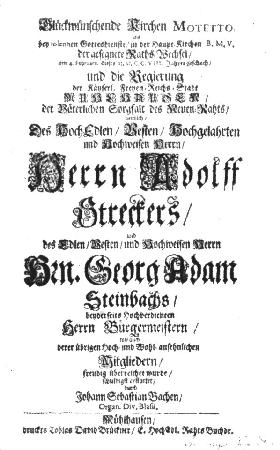
*This image is from the title page of a music book published in 1894. My copy came from my great-uncle George, which I think belonged to his grandfather before him.


Posted in Books, School | Tagged , , , , , | Leave a comment

Ruth Elaine Caauwe

On Monday, Ruth Elaine Caauwe joined our family. She showed just how big a blessing she is by tipping the scales at 10 pounds and 9 ounces. The whole family is delighted. If you’re keeping track, yes, Ruth makes seven.

Obviously, Ruth has also tipped the scales in our family further towards the girls. Most of the kids were hoping for a boy. But I don’t think any of them are disappointed now, and love their sister dearly. We named her Ruth. In the Bible, Elimelech and Naomi had two sons. After her husband and two sons died, Naomi said her life was “bitter” and “empty.” It was about her daughter-in-law Ruth that the women said, “who loves you and who is better to you than seven sons.”

What makes our children—every single one of them—so valuable, is not how they contribute to a well-planned or balanced family structure. It’s not about how well-behaved or smart or even how independent or successful they may someday become. But they find themselves within our family, in this environment where we give and receive love. We care for each other. We forgive each other. And every one—boy or girl—that is received into this family strengthens the network and fabric of that love.

Naturally, every new baby makes me think about my vocation as father. As my daughters grow in size and number, I think especially about the unique relationship that I have with my girls. This past year I read a fantastic book on the subject. It’s called Strong Fathers, Strong Daughters by Dr. Meg Meeker. It speaks of the unique dangers and challenges that confront girls today, and the unique role that their fathers play in their live. Dads with daughters: I highly recommend this book.

There’s another book which I actually just purchased today that, even though I haven’t read it yet, I am confident to recommend. It’s called Family Vocation: God’s Calling in Marriage, Parenting, and Childhood by Dr. Gene Edward Veith. Dr. Veith is also the author of the excellent book on Christian Vocation—God at Work.  This is a must-read, and I am looking forward to reading this newest piece.


Posted in Books, Children, Family | Leave a comment

Now that to the font I’ve travelled…

Nine years ago today we brought our firstborn daughter Hannah to be crucified and buried with Christ in Holy Baptism. Since that day, we’ve been back to the font many times. Actually, we have been to three other fonts for our five other children. And God-willing, we’ll be back at the font again in just a matter of weeks, as we are awaiting the appearance of our seventh gift of God. Each and every trip impresses on me more and more that “there is nothing worth comparing to this life-long comfort sure.”

But that is not to say that my only trips to the font have been to be baptized, to baptize, or to bring my children to baptism. No, this font is a daily destination. For this is the only water that can wash away what has been wrong today and drown the old Adam who loves to swim. The daily activity starts with the sign of the cross. “In the name of the Father and of the Son and of the Holy Spirit.” It confesses “I believe” and it prays “Our Father.” From there, this daily activity gets going, singing a hymn perhaps, busy with vocations like father, husband, and pastor. Until the day is over and again we finish at the font. “Forgive me all my sins, and graciously keep me this night.”


Posted in Baptism, Children | Tagged , | 1 Comment

2011 Reading

Here is a list of the books that I have read in the past year. As in prior years, I cannot recommend every book on the list, but many were simply outstanding. Email me or leave a comment if you want to know what I thought of any of these books.

  1. God So Loved the World (Lyle Lange, NPH)
  2. Whether Soldiers, Too, Can Be Saved (Martin Luther LW 46)
  3. Positively Lutheran (John Braun, NPH)
  4. The Kingdom of Christ (J.P. Meyer)
  5. Dying to Live (Harold Senkbeil)
  6. The Papacy Evaluated (E.G. Behm)
  7. Johann Kilian, Pastor (George Nielsen)
  8. A Tale of Two Synods: Events That Led to the Split between Wisconsin and Missouri (Mark Braun)
  9. The Christian & Birth Control (Robert Fleischmann)
  10. Working the Angles: The Shape of Pastoral Integrity (Eugene H. Peterson)
  11. On Being a Christian: a personal confession (Henry Hamann)
  12. Motivation for Ministry: perspectives for every pastor (Nathan Pope)
  13. Crime and Punishment (Fyodor Dostoyevsky)
  14. First Conversation (Bethesda Institute)
  15. What in the World Is Going On?: Identifying Hollow and Deceptive Worldviews(David C. Thompson)
  16. Down Range: to Iraq and Back (Bridget C. Cantrell, Ph.D., & Chuck Dean)
  17. Examination of the Council of Trent, part 2 (Martin Chemnitz)
  18. Why Johnny Can’t Sing Hymns (T. David Gordon)
  19. The Cradle and the Crucible: A history of the forming of the Arizona-California District (Charles E. Found)
  20. The Ministry of the Word (John Brug)
  21. Ministry, Word, and Sacraments: An Enchiridion (Martin Chemnitz)
  22. Gazelles, Baby Steps, and 37 Other Things Dave Ramsey Taught Me About Debt (Jon Acuff)
  23. Strong Father, Strong Daughters (Dr. Meg Meeker)
  24. The Hammer of God (Bo Giertz)
  25. Luther’s Liturgical Music (Robin Leaver)
  26. Why Johnny Can’t Preach (T. David Gordon)
  27. The Theology of the Cross (Daniel Deutschlander)

The most useful things I read this year were the two titles by Martin Chemnitz. They do not call him the “second Martin” for nothing.

The Amazon Kindle has made an impact on the way I buy and read books. Only two of the books on this year’s list were read on my Kindle, but that’s mostly because I had more than a year of reading in my “to-read” pile. That pile is beginning to dwindle, and I suspect that more than half of the books I read in 2012 will be in Kindle format. There are some books that I will still prefer to have and use in hard copy—especially reference books that won’t be read straight through. But right now I have at least three books loaded on my Kindle ready to read as soon as I get to them.

Posted in Books | Tagged , | 10 Comments

Nicolai, Heermann, Gerhardt

This morning I read this description of these three Lutheran hymn writers in The Treasury of Daily Prayer (actually I read it on the iPad app version, PrayNow).

Philipp Nicolai (1556–1608) was a pastor in Germany during the Great Plague, which took the lives of 1,300 of his parishioners during a sixth-month period. In addition to his heroic pastoral ministry during that time of stress and sorrow, he wrote the texts for “Wake, Awake, for Night Is Flying” and “O Morning Star, How Fair and Bright,” known, respectively, as the king and queen of the Lutheran chorales. Johann Heermann (1585–1647), also a German pastor, suffered from poor health as well as from the ravages of the Thirty Years’ War (1618–1648). His hymn texts are noted for their tenderness and depth of feeling. Paul Gerhardt (1607–1676) was another Lutheran pastor who endured the horrors of the Thirty Years’ War. By 1668 he lost his pastoral position in Berlin (for refusing to compromise his Lutheran convictions), and endured the death of four of his five children and his wife. He nevertheless managed to write 133 hymns, all of which reflect his firm faith. Along with Martin Luther he is regarded as one of Lutheranism’s finest hymn writers.

If I started writing about the significance of these three men in Lutheran hymnody, I would never finish. So I’ll just share a few links and comments about each of them.

Philipp Nicolai

The King: Wake, Awake
There is hardly anything better than Bach’s cantata (BWV 140) on this hymn, especially the choral settings of the 2nd and 3rd stanzas. Get it on Amazon. I especially love this brass setting of the final choral.

The Queen: O Morning Star, How Fair and Bright (How Lovely Shines the Morning Star)

Johann Heermann
When I was a kid, I used to page through the hymnal looking for hymns written by “Johann”s. It was a bonus to find hymns with both text and tune by someone who shared my name (especially because I didn’t know any real/living people who shared my name).

Feed Your Children God Most Holy – we sing this regularly at meals in our home, especially when the whole family is together or when we have guests in our home.

O God, My Faithful God

O Dearest Jesus

Paul Gerhardt
Here is a German documentary on Gerhardt life, work, and significance. I suspect, though, that many of the people interviewed, who appreciate Gerhardt’s hymnody and poetry, totally miss the main and central point of Gerhardt’s hymns—Jesus.

O Jesus Christ, Your Manager Is
Post 1
Post 2
 

Lobet den Herren – I have found this simply enchanting. I have sometimes said that it would have been worth learning German just to be able to sing Paul Gerhardt hymns.

Now Rest Beneath Night’s Shadow
March 10, 2008 Post
Evening Hymn – April 12, 2011


Johann Heerman
Posted in Hymnody | Leave a comment

Cranach in the Study

Over ten years ago, a friend introduced me to this painting he saw while touring the Luther lands in Germany. It’s a part of an altarpiece of St. Mary’s Church in Wittenberg—the church where Luther regularly preached.

Ever since, I have always thought that this would make an excellent piece to have hanging on the wall of my study. Today, I got my wish. I was able to order a giclée reprint from art-prints-on-demand.com and then had it framed at a local frame shop here in northeast El Paso.

Here is what strikes me about the painting:

  • Luther’s preaching points to Christ. He is preaching from the Scriptures, but the Scriptures always point us to Jesus. Therefore preaching should do the same. Preaching is not primarily aimed at educating or entertaining people, nor is it primarily aimed at changing people’s behavior. But it is to point to Christ who hung on the tree in place of sinners.
  • The congregation listens to Luther preaching, but their attention is also on Christ. They see Christ and hear Christ. Jesus should always “get in the way” between the preacher and the parishioner. This, then, is how the laity evaluates preaching—by what the preacher says about Jesus.
  • The congregation is made up of young and old. The congregation includes the youngest of those who believe in Jesus. Babies sit with an unobstructed view of Christ—at the front of the church. They, too, need Jesus. They, too, hear and see Jesus in the divine service. They, too, receive the gifts of Christ.

Posted in Study | Tagged | 4 Comments